5070115067_05bd34b251_c.jpg

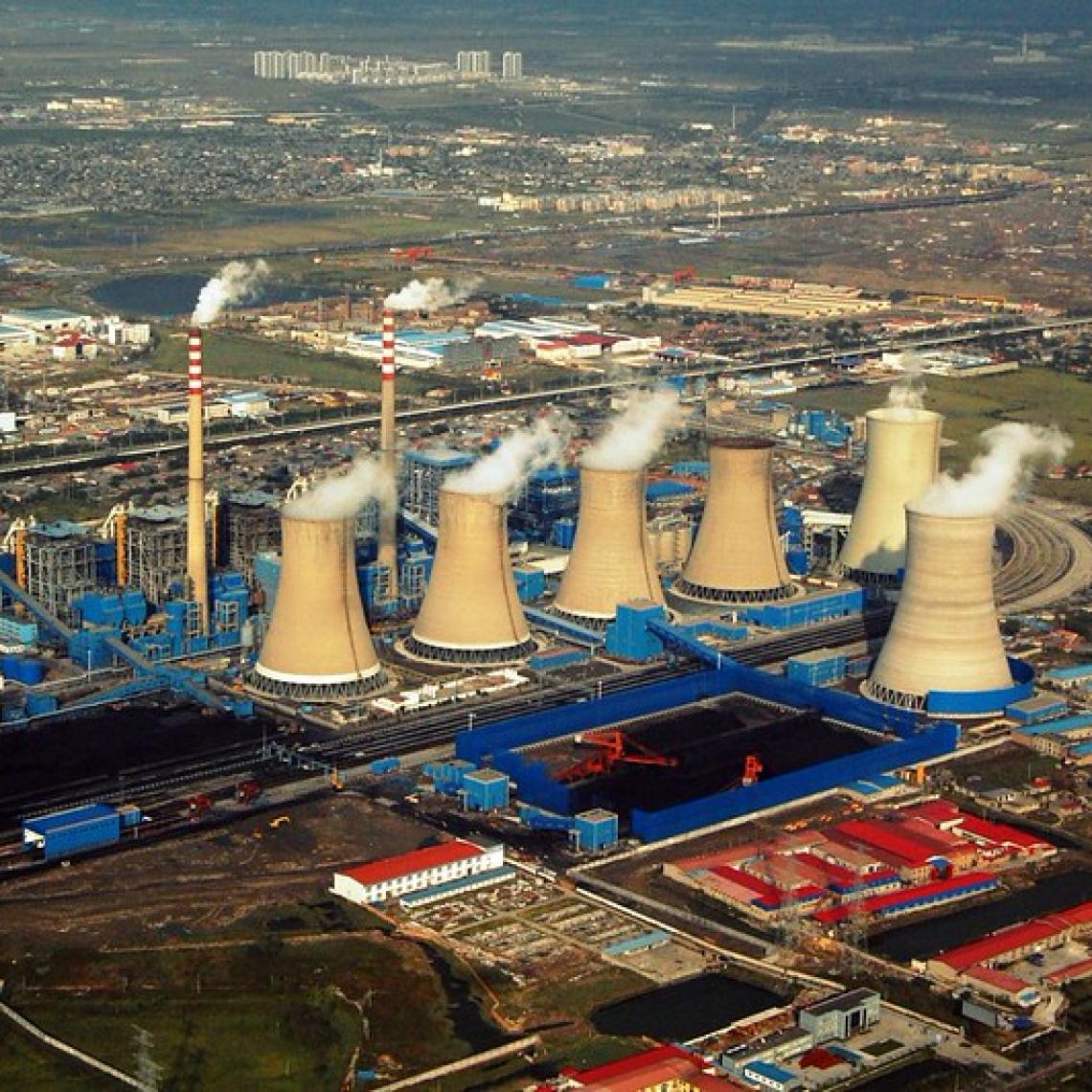
Power Plant (Tianjin, China) by Shubert Ciencia on Flickr.

05:46 pm | June 2, 2026

Too Big to Unwind? About the Current State of China’s Coal Sector

Beneath the headlines about China's renewable-energy boom, coal remains deeply embedded in the country's economy. This article explores why China's dependence on coal persists and how the industry's "greening" masks the true scale of that reliance.

By Belinda Uebler

Quick Takes
 

  • Despite rapid renewable expansion, China continues to build new coal-fired power plants and increase coal output, underscoring the coal sector’s deep economic and political role in China’s development model.
  • China still lacks a clear coal phase-out strategy. Decarbonization remains fragmented, while coal-dependent cities are experimenting with industrial diversification and tourism as alternative growth models.
  • Coal-dependent regions face deep structural constraints: slower growth, population decline, and limited investment, reinforcing reliance on coal in many regions.
  • Coal-based industries remain central to China’s economy, including coal-to-chemicals, and coal-based hydrogen. Framed as green transition strategies, they often amount to rebranded continuity rather than true transformation.

As countries around the world struggle to honor their climate pledges, China appears to have found an effective way to improve its emissions record: changing how it counts. According to a recent report by the Centre for Research on Energy and Clean Air (CREA), Beijing has revised its carbon-accounting methodology, altering the calculation of carbon intensity in a way that excludes certain non-energy uses of fossil fuels. As a result, China's reported emissions growth between 2020 and 2025 was effectively halved on paper, creating a statistical gap of roughly 730 million tonnes of CO₂ annually. The revision lowers the threshold for meeting China's climate targets, allowing the country to appear closer to fulfilling its 2030 commitments even if its absolute emissions continue to rise.

This episode is just one example of the broader challenge of understanding China's carbon footprint. In recent years, optimistic headlines about falling CO₂ emissions and efforts to curb coal-fired power generation have fostered the impression that the country is on a clear and rapid path toward decarbonization. Yet such narratives often obscure the structural realities of China's energy system and its long-term trajectory. Behind the stories celebrating record growth in renewable capacity lies a more complicated coal story.  Although China’s renewable buildout is substantial, it coexists with a large, hard-to-abate coal sector that remains deeply embedded in industrial production and the overall energy mix, underscoring the continued expansion and central role of coal in electricity generation.

In recent years, China’s rapid expansion of renewable energy capacity has had profound effects on its traditionally coal-dominated energy system. In 2024 and 2025 alone, China installed 360 and 430 gigawatts of wind and solar capacity, respectively. In 2024, this represented roughly 64% of all new solar and wind installations worldwide. Most notably, as of February 2025, for the first time, wind and solar energy together – reaching a total installed capacity of 1.45 billion kW – have overtaken coal power, becoming China’s largest electricity source in terms of installed capacity.

This, however, does not mean that renewable energy has already displaced thermal power such as coal, despite increases in installed capacity. Chinese data, and increasingly global data, tend to report installed capacity, which indicates the potential maximum output, rather than operational or actually producing capacity. In practice, especially in China, only a fraction of installed renewable capacity is actively generating electricity at any given time due to storage limitations and grid dispatch constraints, among other factors. Consequently, when examining China’s energy mix, which reflects the energy actually consumed by society, coal energy still accounts for the majority, representing 55.5 percent of the total between October 2024 and September 2025. Moreover, as China’s total energy demand continues to rise, the absolute amount of coal-fired electricity generation increased for many years and only declined for the first time in 2025, by 1.6% year on year.
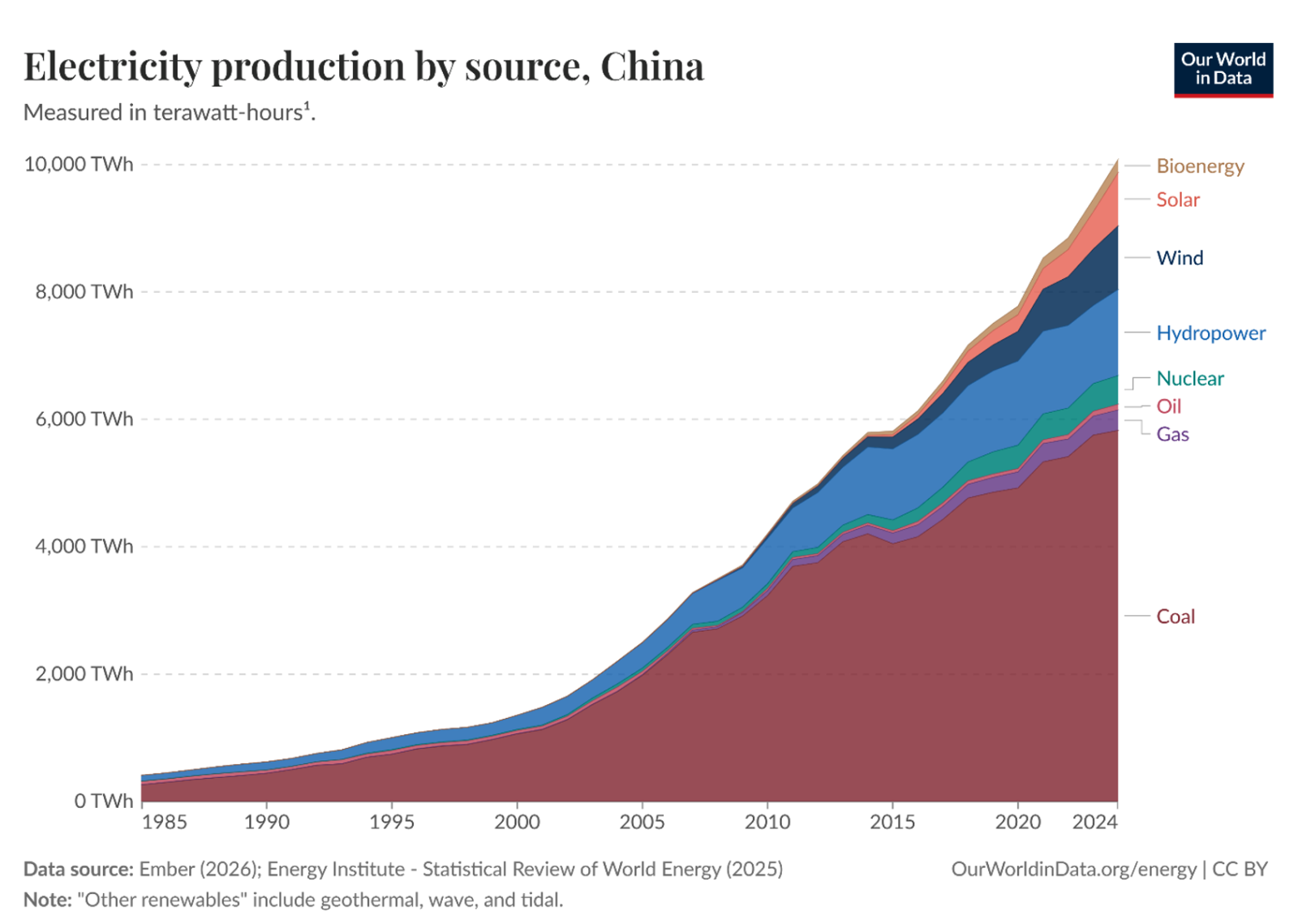
figure1.png

Our World in Data. 2025. “Electricity Production by Source, China.”

Against the backdrop of global climate targets and China’s commitments to peak carbon emissions by 2030 and achieve carbon neutrality by 2060, deep decarbonization has become an essential policy objective. Achieving these goals requires a comprehensive energy transition, as the energy sector constitutes a central source of CO₂ emissions. A key component of this transition is the gradual phase-out of coal. In China, however, the coal sector is deeply embedded in the country’s economic structures, regional development, and energy system, making a rapid exit particularly challenging. Against this background, this paper examines the current state of China’s coal sector and analyzes the economic, structural, and political challenges associated with a necessary phase-out of coal in China.

Where China’s Coal Industry Stands Today

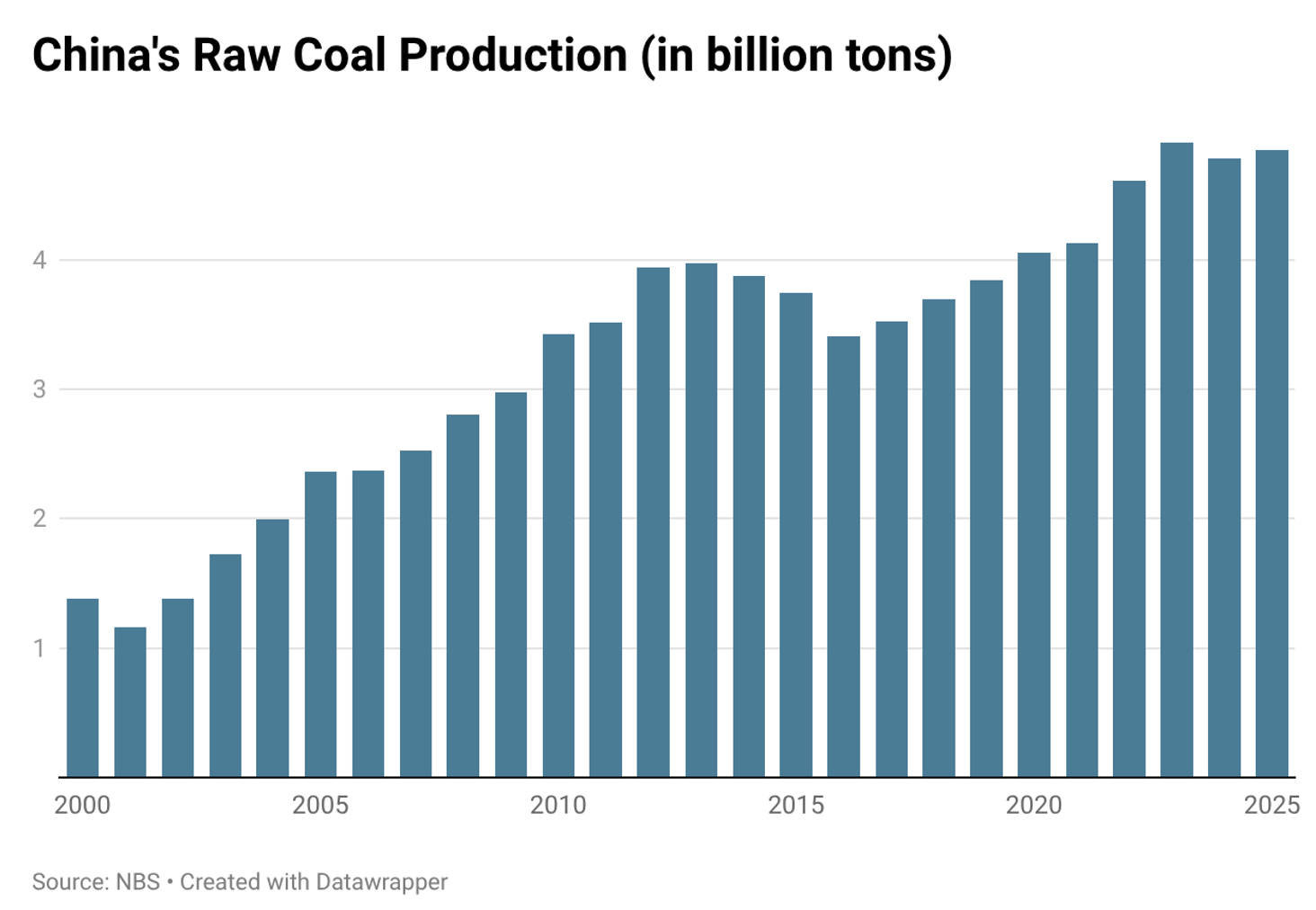
Despite China’s rapid expansion of renewable energy installations, the country has also continued building coal-fired power plants, reaching a 10-year high of 94.5 gigawatts in 2024, driven by rising energy demand and concerns over energy security. In 2025, a record number of coal power plants were newly commissioned, alongside unprecedented levels of project starts and reactivations. Coal mining output has likewise increased to record levels in recent years, following a period of stagnation and slight decline throughout much of the 2010s. This simultaneous growth in renewables and thermal energy shows that isolated figures can be misleading without considering the full context of the country’s energy transition.
 

chinas row coal production.png

Merely in terms of coal sector employment, the situation looks clearly different. Following a series of environmental regulations and policies aimed at reducing coal overcapacity in the 2010s, numerous closures and layoffs occurred within China’s coal sector. As a result, coal employment has fallen to historically low levels in recent years, declining by around 50% between 2013 and 2022 in coal mining, washing, and dressing. However, precise figures are difficult to determine, as actual employment numbers may be somewhat higher than officially recorded.

Despite declining coal employment, coal remains central to China’s energy system. The overwhelming majority of coal production is directed toward industry, where it is consumed either in its original form or as heat or electricity. Consequently, China’s industry would be most affected by a structural phase-out of coal, while other end-use sectors such as residential, commercial, agricultural, and transport account for only a marginal share and would be comparatively less affected.

Thus, despite growing narratives of a ‘greening’ China driven by the rapid expansion of renewable energy, a more accurate picture recognizes the continued existence and dominance of a large, hard-to-abate coal sector. This sector continues to fuel China’s industry and remains a central component of the energy mix, even amid rising renewable capacity installations.

Tentative attempts at transformation

Despite China’s dual carbon goals – peaking CO₂ emissions by 2030 and achieving carbon neutrality by 2060 – there is still no consistent, nationwide phase-out of coal. Instead, China has implemented a series of mostly isolated decarbonization policies and emission reduction targets that are partly intended to support the dual carbon goal, but vary in strictness across regions and political priorities. Decarbonization policies include such on the closure of coal mines and coal-fired power plants, particularly smaller facilities with poor environmental standards, as well as plant and mine shutdowns aimed at reducing air pollution among others. They also encompassed the closure of coal-based production capacities in the steel or aluminium sectors, or banning coal as a heating source in rural areas of northern China.

One of the most notable examples of a cross-sectoral and multidimensional policy aimed at transitioning away from coal in China so far is the transformation of coal resource-depleted cities. In the 2000s, the Chinese government began addressing the growing number of resource-depleted cities across the country, which were struggling with structural economic problems. Between 2008 and 2012, the central government officially designated 69 resource-depleted cities, including 37 coal resource-depleted cities, although the current actual number is likely much higher. These officially recognized resource-depleted cities received and still receive support from the government, particularly in the form of transfer payments to support social security, education and healthcare, environmental protection, public infrastructure construction, and interest subsidies for special loans in these cities. The transfer payments were conceived as time-limited from the outset, initially for three to four years from 2007 to 2010. Later, the possibility of extensions was announced, followed by plans for a phased withdrawal. In practice, however, new extension options continued to be introduced, and transfer payments to resource-depleted cities are still being made to this day.

Although transfer payments have increased in absolute terms in recent years, when compared to the budgets of the affected cities, these payments provide limited support, and may thus not be sufficient as a long-term strategy for facilitating the transformation. In this context, some cities have been reportedly unenthusiastic about applying for these transfer payments because the amounts are relatively small.
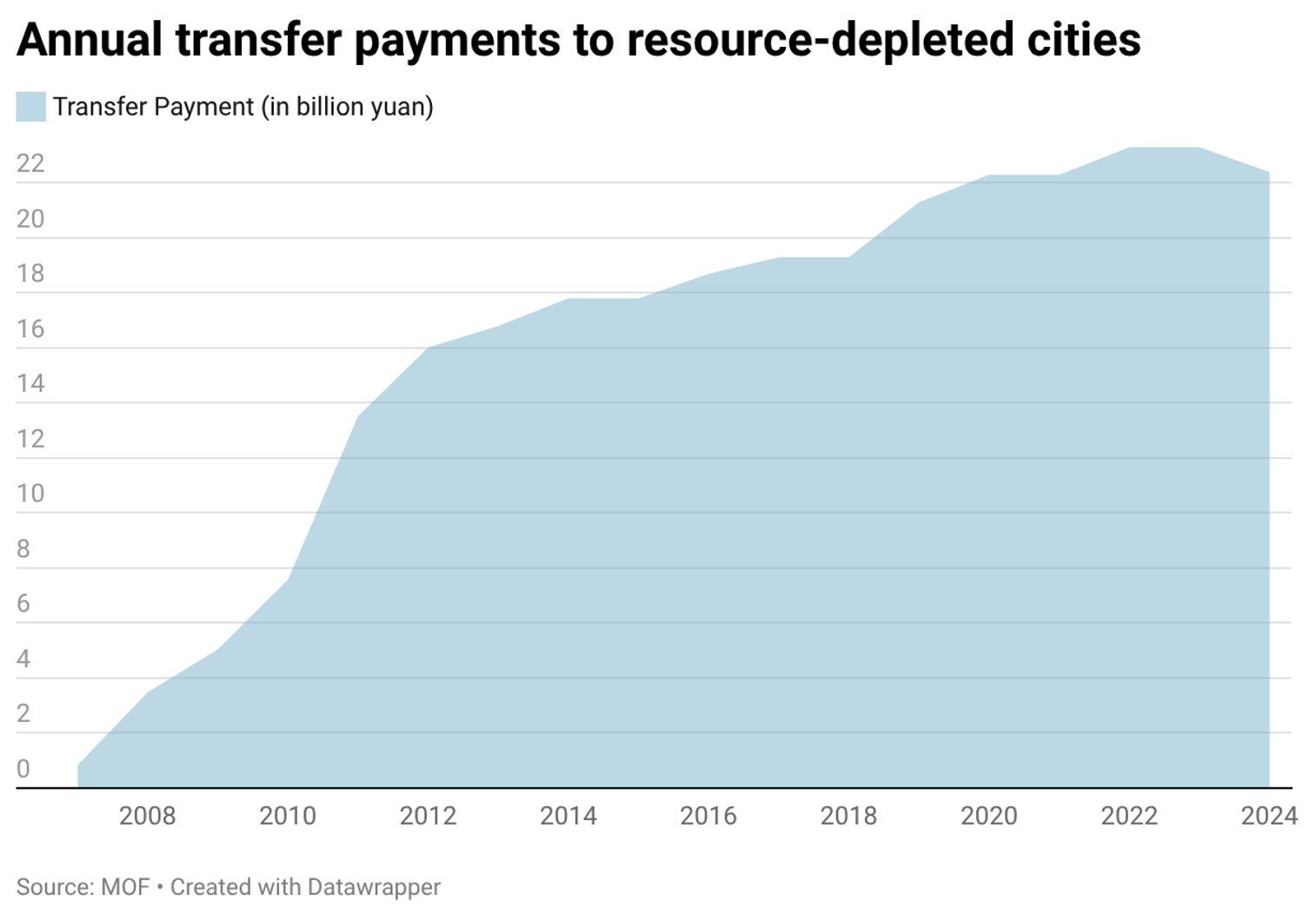

Annual transfer payments by the central government.png

Beyond financial support, these resource-depleted cities, and particularly their local governments, are expected to attract new investments or establish new industries to accelerate the economic diversification of cities that, for decades, have been overwhelmingly dependent on coal and largely monoindustrial.

Investment attraction remains challenging in many regions of China, partly due to the country’s overall economic slowdown and partly because local conditions, such as geographic location, infrastructure, and other factors, often limit their appeal to investors. In practice, it is primarily politically prioritized “guideline industries” that are established in these areas, as they are promoted under national industrial policies regardless of local suitability. However, these industries are frequently expanded without thorough assessments of actual demand, often resulting in overcapacity, as observed in sectors such as solar and renewable energy manufacturing or electric vehicle production. In provinces like Shanxi, typical investment initiatives in cities repeatedly focus on similar sectors, including tourism, renewable energy expansion, and battery production. This pattern reflects a top-down approach to investment planning, in which comparable strategies are applied across multiple cities rather uniformly. Drawing on existing infrastructure and resources from their coal era, many resource-depleted cities have also developed more diversified heavy industries, such as the chemical industry, new materials, aluminium production, and metal smelting, among others.

As a result, primarily due to the lack of alternative industries, there is often no clear or sustained shift away from coal. Development trajectories frequently revert to coal, particularly for economic reasons. This pattern is especially pronounced in cities located in traditionally coal-dependent, resource-based, and structurally weaker regions of China, making the transformation process in many coal cities particularly challenging. Furthermore, the political system, including corruption, frequent turnover of local cadres, and misaligned incentives, produces varying effects on the long-term transformation process depending on the locality and specific circumstances. In some cities, local officials act as proponents of coal phase-out, while in others they function as opponents, reflecting their highly variable and context-dependent role in the transformation process. Cadres often do not continue the strategies of their predecessors, which prevents long-term transformation plans from being fully implemented.

Yet, transformation efforts have not been limited to coal resource-depleted cities. Cases of coal restrictions in non-coal mining cities have revealed similar challenges, indicating that many non-coal cities, particularly heavily industrialized ones reliant on coal energy, are also likely to face a difficult transition. This is partly due to the fact that certain industrial sectors in China, such as cement, chemicals, aluminum, textiles, and others, have become structurally oriented toward coal – not necessarily because coal is essential to their production, but because state policies and cost advantages over decades have made these industries unnecessarily coal-dependent.

In terms of coal consumption, for example, Shandong Province, located on China’s east coast and possessing very limited coal-mining resources, has for years recorded the second-highest level of coal consumption nationwide, after Inner Mongolia. After all, Shandong has long had high electricity demand from its dense population and economy, and especially from its large industrial base in energy-intensive sectors such as steel, cement, chemicals, and petrochemicals, supported by extensive coal-fired power generation and energy security policies that favor coal.

Consequently, even smaller cities without coal resources can experience transformation shocks comparable to those of post-mining cities when confronted with non-coal policies that mandate the closure of coal-based industrial production capacities. In Zouping, a – at least by Chinese standards – small non-mining city of 700,000 inhabitants in the Eastern province of Shandong, these policies caused its GDP to halve from one year to the next, despite the city not being a coal city in the conventional sense.

Challenges in transitioning away from coal

China’s slow energy transition is largely rooted in decades of deep structural dependence on coal. Over time, coal became not just the dominant fuel but the organizing principle of China’s economy, energy system, and governance structures. This has made a shift to alternatives politically, technically, economically, and socio-economically difficult. As Chinese energy experts note, coal abundance was long treated as a self-evident justification for a coal-heavy energy mix despite international examples showing that resource abundance does not preclude diversification.

This prolonged coal focus has shaped infrastructure, planning, management, and operational mechanisms, creating strong path dependence that hinders structural change and renewable deployment. It has also produced a form of “coal preference,” reinforced by symbolic and emotional reasoning and the persistent belief that coal is the cheapest option even where cost data suggest otherwise. These biases are embedded in market and policy structures where coal is often favored in operations and investment, e.g. large coal units dominate baseload supply, and inefficient long-distance coal transport persists while gas and other energy alternatives are undervalued. Weak policy enforcement and entrenched interest groups further contribute to coal overcapacity, while electricity prices based on coal make it harder for alternatives to compete.

Another factor underlying China’s continued reliance on coal is its broader push for greater self-reliance. In line with central government guidance to develop strategic sectors and reduce dependence on Western powers, some coal-based industries continue to receive state support rather than being meaningfully constrained by decarbonization policies. Prominent examples include coal coking and coal-to-chemicals. Currently, it works in China’s favor: the steady expansion of the coal chemical sector has enabled the substitution of coal for oil, a strategy now paying off amid surging oil and gas prices driven by supply shortages. In this context, coal has effectively been assigned a geopolitical role by the state – one it is unlikely to relinquish anytime soon. It thus serves not only as an energy source but also as a tool for enhancing national self-sufficiency and reducing import dependence.

Beyond the extreme dependence on coal, which already makes the energy transition particularly difficult, issues of injustice and greenwashing pose additional serious challenges. At the international level, in particular at the UN’s recent COP30, China has positioned itself as a proponent of the “just transition” concept, emphasizing that the transition should not disadvantage specific regions or actors particularly affected. Domestically, China has not articulated a clear position on just transition, and the term itself is largely absent from public discourse. Nevertheless, the challenges of a just transition are very much present. In the event of a coal phase-out, China faces an exceptionally large number of coal-dependent cities and regions that would require support within the framework of an energy transition. Compared to other countries, this significantly increases the social and economic burden of transition.

shanxi-mining-cctv-new.png

The moment of the gas explosion that triggered the Shanxi mining disaster, which killed at least 82 workers. Screenshot from tv.cctv.com.

From a social and socio-economic justice perspective, coal sector workers are among those most affected by a coal phase-out – especially in structurally and economically underdeveloped coal provinces, where alternative employment opportunities are extremely limited. In theory, many coal cities have announced support measures for laid-off coal workers, including retraining programs to facilitate reemployment, subsidies for enterprises that avoid or limit layoffs, support policies for unemployed workers seeking to start their own businesses, and the creation of public-interest jobs for those struggling to find new employment. In practice, however, implementation is highly uneven. Only a small number of enterprises, mostly state-owned ones, offer meaningful retraining or job placement support. Employees in privately owned mining companies are often laid off without severance pay, as they usually do not have formal long-term contracts.

In May 2026, a coal mine gas explosion in Shanxi Province killed at least 82 people. Around half of the workers at the mine were unregistered subcontract laborers operating in concealed, unauthorized tunnels without mandatory tracking devices or adequate safety protections, exposing serious illegal labor practices and systemic safety violations that contributed to the tragedy.

At the city level, injustice also manifests in uneven and often stringent support conditions from central and provincial governments. While coal resource-depleted cities may receive targeted assistance, such as transfer payments, they simultaneously face growing domestic competitive pressures, as cities with poor economic performance risk being neglected. This is illustrated by the case of Shizuishan, a coal resource-depleted city that was removed from the national-level economic development zone list in 2021 after ranking near the bottom for two consecutive years, thereby reducing its prospects for economic development. In Shanxi, several cities have raised concerns about unequal support, attributing this to weak coordination at the provincial level, where resources and investment are often concentrated in the capital, Taiyuan.

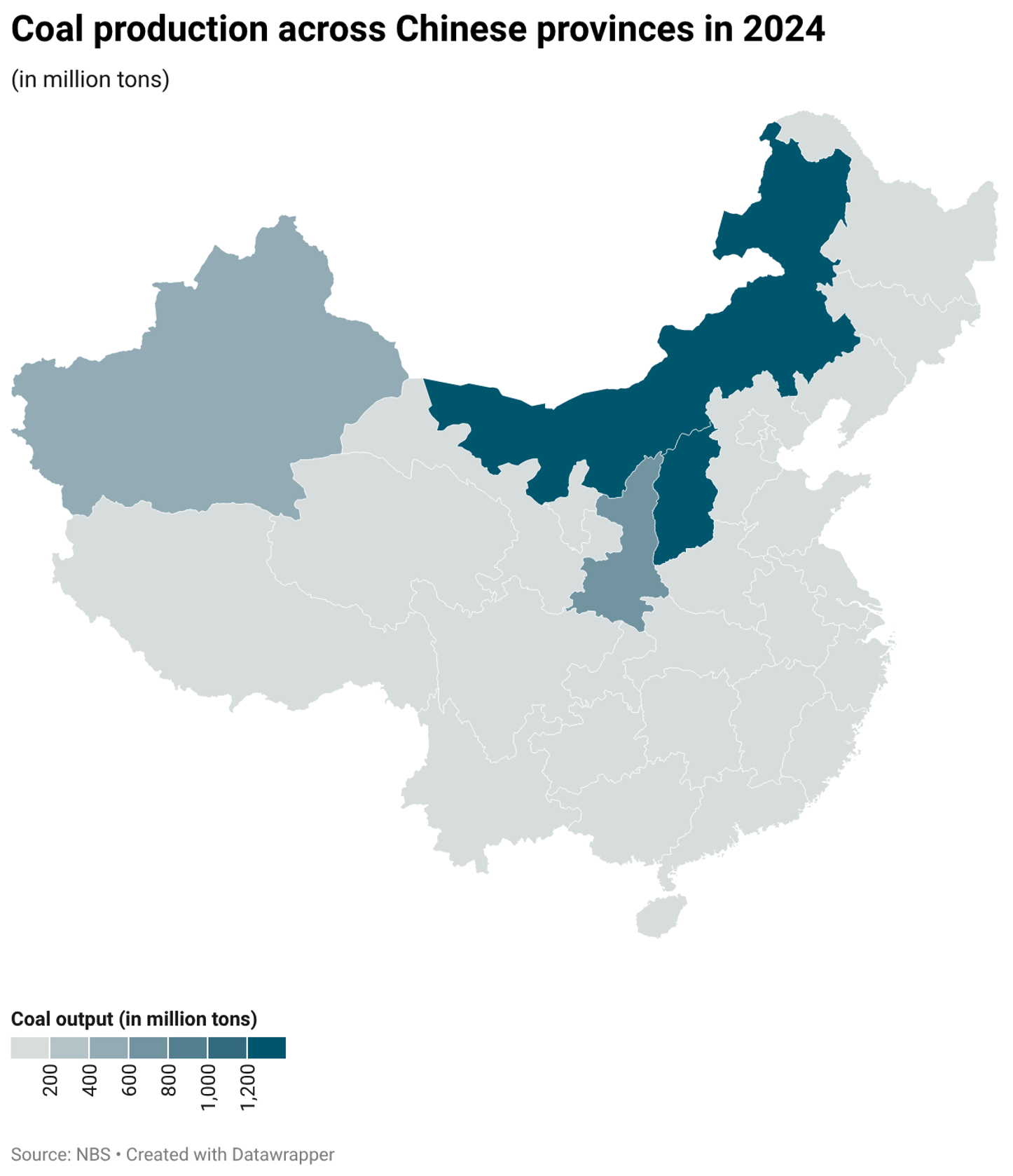
At the regional level, the coal transition is likewise marked by persistent injustices. Generally, support and resources tend to be concentrated in the politically and economically important east coast region of China, while significantly less assistance is directed to peripheral areas. Historically, several provinces have long been exploited as resource hinterlands, with coal serving as the backbone of China’s rapid industrialization, while much of the generated value was not reinvested locally. This dynamic is particularly evident in the resource-rich but economically and structurally underdeveloped northern provinces of Inner Mongolia, Shaanxi, and Shanxi, commonly referred to as the “coal triangle” and marked in dark blue in the map below.

coal-production-2024.png

In Shanxi, among other coal producing provinces, decades of coal extraction were not leveraged to develop sufficient downstream industries, resulting in limited long-term economic benefits and unevenly distributed, short-term gains. Wealth accumulation was largely concentrated among a small elite of coal enterprise owners in both state-owned and private sectors, while many miners faced poor working conditions, low wages, and few alternatives as resources became depleted. Structural weaknesses, inadequate infrastructure, and the long-standing strategic neglect of western or northeastern China have further constrained these regions’ ability to attract investment, a reality often summarized by the saying that “investment does not go beyond Shanhaiguan”, meaning it won’t reach more peripheral regions of China.

Beyond questions of justice, the greenwashing of the coal sector presents another major challenge to the transition. Rather than being phased out, many coal-related activities are increasingly reframed. By emphasizing technological upgrades or “green” modifications, attention is diverted from their continued dependence on coal. In Shanxi among other regions, the upgrading of the mining sector, often under the term “green mining” (绿色开采) is actively marketed as part of the transformation of coal cities, creating the impression of progress while the underlying dependence on coal remains unchanged. Similar dynamics can be observed in the promotion of allegedly “green” innovations, such as hydrogen projects. In practice, much of this hydrogen is produced using coal-based processes, resulting in blue or grey hydrogen rather than genuinely green alternatives. In Shanxi in particular, local and provincial governments have been actively supporting newly emerging industries and companies that produce “new energy,” for example, using by-products of coal and other fossil fuels. These initiatives are often labeled as green energy, even though they are still closely linked to the coal industry and do not fully meet the conventional definition of truly green energy.

Conclusion

Despite China's massive expansion of renewable energy capacity, coal remains deeply entrenched in the country's political economy. Decades of structural dependence, the dominance of powerful state-owned enterprises, and strong vested interests at the local level continue to reinforce coal's central role. Efforts to phase out coal—particularly in resource-dependent and resource-depleted cities—face formidable obstacles, including weak alternative industries, limited private investment, and fiscal pressures that often push local governments back toward coal-based development.

The implementation of transition policies is further undermined by fragmented governance, blurred administrative responsibilities, and incentive structures that reward officials for short-term economic performance rather than long-term decarbonization. As a result, coal continues to dominate many regions, increasingly concealed behind ostensibly "green" initiatives such as coal upgrading, coal-to-hydrogen projects, and efficiency improvements that do not fundamentally reduce coal dependence.

The social costs of this dependency are borne disproportionately by workers and local communities, who often face economic insecurity, precarious employment, and environmental and safety risks. At the same time, many industrial products in China, including components essential to the global energy transition, are still manufactured through highly coal-intensive processes. Consequently, technologies labeled as low-carbon cannot automatically be assumed to be "green".

The growing tendency to rebrand coal as part of a green transition risks obscuring the true scale of China's continued reliance on fossil fuels. Ultimately, overcoming this self-reinforcing dependency will require not only technological change but also far-reaching reforms in governance, fiscal incentives, industrial policy, and labor protection. 


————

Belinad Uebler is a PhD candidate at Heidelberg University whose research focuses on environmental politics, climate policy, and industrial policy.

This article was originally published as part of the EU Horizon Project “European Hub for Contemporary China” and has been slightly revised and updated to reflect recent events.

June 2, 2026